
The use of digital currencies, smart contracts and other emerging financial technologies by central banks is necessary in the Eurasian Economic Union (EAEU) for both intra-Union trade and interaction with third countries. This is due to the impact of sanctions imposed by various states, which negatively affect the efficiency and cost of cross-border payments. This was the opinion of experts and representatives of government agencies at the International Settlements and Digital Assets session, held as part of the Eurasian Economic Forum.
KEY CONCLUSIONS
Digitalization in the EAEU payment and settlement infrastructure will reduce the cost and improve the speed of cross-border payments
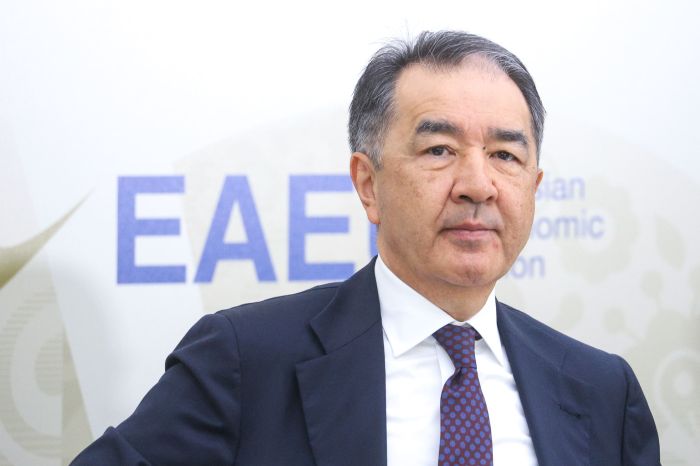
"At the national level, the introduction of central bank digital currencies will reduce the cost of ... cross-border settlements, automate … procedures such as exchange control, and reduce transaction costs," said Bakytzhan Sagintayev, Member of the Board (Minister) for Economics and Financial Policy of the Eurasian Economic Commission.
“In our view, the use of new technological platforms can offer numerous advantages over traditional systems, including enhanced settlement speed, improved confidentiality, and reduced costs for businesses," said Alexander Murychev, Vice President for Financial Policy and Economic Sector Development, Russian Union of Industrialists and Entrepreneurs (RSPP).
"Of course, central bank digital currencies have the potential to significantly increase the availability of non-cash payments … to improve the efficiency of government payments and the transparency of economic relations. <...> We anticipate that, of course, central bank digital currencies will create a fundamentally new mechanism for cross-border payments between countries. There will also be advantages for business … such as reduced costs and fewer intermediaries between participants," said Berik Sholpankulov, Deputy Governor, National Bank of Kazakhstan.
PROBLEMS
Sanctions have had a negative impact on cross-border transactions with EAEU countries
"Today we are witnessing geopolitical processes that have a serious adverse impact on the global financial system. With this in mind, it is crucial for us to guarantee financial stability and the reliability of financial markets. It is also imperative to implement proactive measures to safeguard the rights and interests of consumers of financial services within EAEU states," said Bakytzhan Sagintayev, Member of the Board (Minister) for Economics and Financial Policy of the Eurasian Economic Commission.
"The process of de-banking, which refers to disconnecting certain countries from global payment systems ... was discussed ten years ago in terms of its impact on trade and the facilitation of grants. Now, all these processes have intensified," said Ksenia Yudaeva, First Deputy Governor, The Central Bank of the Russian Federation (Bank of Russia).
"Undoubtedly, the imposition of economic sanctions on the Russian Federation and the Republic of Belarus has resulted in the closure of several crucial markets and the disruption of well-established cooperation and logistics chains," said Vasily Matyushevsky, Chairman of the Board, BelVEB Bank.
"The restrictions imposed by third countries have a direct impact on the timing and cost of cross-border transactions, and this impact is felt by all. In fact, these actions have effectively destroyed the fundamental principle of the modern financial system, which is the freedom to conduct current transactions," said Alexander Murychev, Vice President for Financial Policy and Economic Sector Development, Russian Union of Industrialists and Entrepreneurs (RSPP).
SOLUTIONS
Introduction of central bank digital currencies into the payment and settlement infrastructure of the EAEU
“When developing approaches to the development of the Eurasian payment and settlement infrastructure, it is advisable to use promising financial technologies such as central bank digital currencies," said Bakytzhan Sagintayev, Member of the Board (Minister) for Economics and Financial Policy of the Eurasian Economic Commission.
"An important element in facilitating smooth international settlements today lies in the selection of alternative currencies … along with the development of effective mechanisms to mitigate the impact of sanctions restrictions. In our opinion, these mechanisms involve the use of currencies of friendly countries, fintech companies, digital payment vehicles and the adoption of digital assets," said Vasily Matyushevsky, Chairman of the Board, BelVEB Bank.
"The task of developing cross-border settlements without relying on toxic currencies can be addressed through the utilization of promising financial technologies. These technologies include central bank digital currencies, smart contracts, special accounting units of multilateral clearing, and so on," said Alexander Murychev, Vice President for Financial Policy and Economic Sector Development, Russian Union of Industrialists and Entrepreneurs (RSPP).
"We have already backed an amendment to the law, enabling Moscow Exchange to serve as a platform for the issuance of digital financial assets. <...> At the same time, we will be moving towards further integrating digital assets in our international interactions. In this regard, I am counting on the digital ruble," said Anatoly Aksakov, Chairman of the Committee of the State Duma of the Federal Assembly of the Russian Federation on Financial Markets.
Use of cryptocurrency, but with a high degree of regulation
"Our main concern is to ensure that the creation of platforms using cryptocurrencies [in foreign economic activities – Ed.] does not result in cryptocurrency contamination within our financial system or create a public frenzy, leading to a widespread desire to hold such alternative currencies. While we have always been and continue to be against encouraging or allowing the use of cryptocurrencies inside Russia, we believe that cryptocurrencies and digital assets can serve a purpose in international trade," said Ksenia Yudaeva, First Deputy Governor, The Central Bank of the Russian Federation (Bank of Russia).
"We have four bills pending on cryptocurrencies. We are in the process of final approval. <...> We expect them to pass the first reading in June," said Anatoly Aksakov, Chairman of the Committee of the State Duma of the Federal Assembly of the Russian Federation on Financial Markets.
For more information, visit the Roscongress Foundation’s Information and Analytical System at roscongress.org/en
