
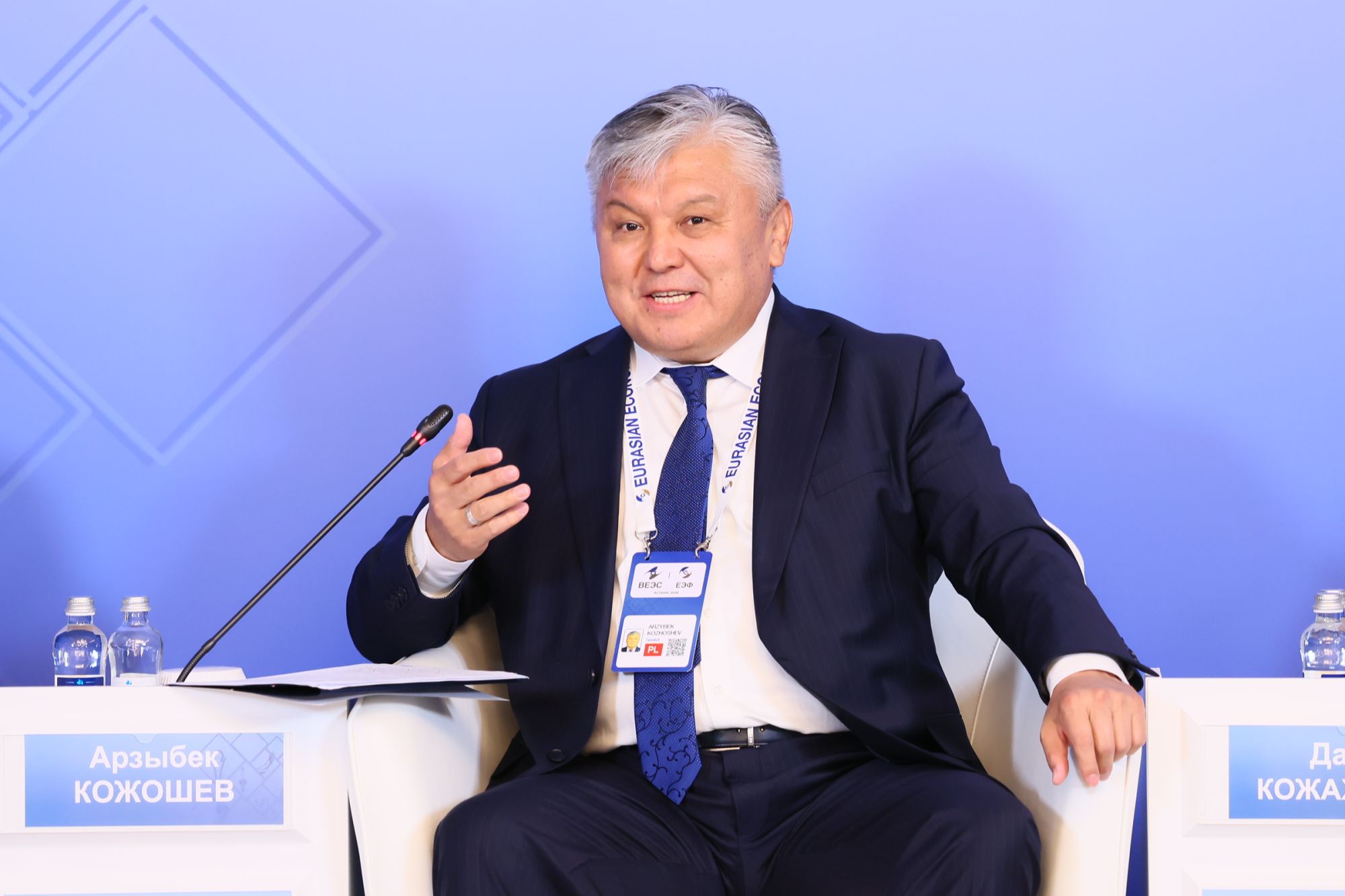
The development of AI and digital technologies in the transport and logistics sector was discussed on 28 May by participants of the thematic session “Digital Solutions in Transport and Logistics.” The event was held in Astana as part of the V Eurasian Economic Forum.
“The transport sector of the Eurasian Economic Union is developing in an era of rapid transformation of the global economy. Today, we are moving from theory to the practical implementation of digital solutions, from pilot projects to the full-scale introduction of paperless technologies, and from individual intelligent solutions to the creation of digital ecosystems,” noted Arzybek Kozhoshev, Minister in charge of Energy and Infrastructure of the Eurasian Economic Commission (EEC).
Speakers at the session included deputy ministers of transport of the EAEU member states, Dmitry Maryasin, Deputy Executive Secretary of the United Nations Economic Commission for Europe (UNECE), and Alexey Skatin, Senior Managing Director of the Eurasian Development Bank.
Participants exchanged views on current cases of AI and digital technology applications, prospects for the development of intelligent transport systems and autonomous transport, technological challenges related to the introduction of AI in transport, and issues of its legal regulation.
In particular, preliminary results were presented for the pilot project on the cross-border electronic exchange of the e-CMR consignment note in international road transport operations. The practical implementation of international road transport operations within the EAEU using e-CMR is planned during 2026.
During the discussion, it was emphasized that digital technologies make it possible to achieve a qualitative leap — from fragmented data to a unified EAEU information space. In particular, Arzybek Kozhoshev noted that digitalisation and the introduction of artificial intelligence can ensure growth of key transport sector indicators by 20–30%.
In conclusion, the Minister noted that the proposals and initiatives put forward during the session will be further elaborated as part of the preparation of a draft roadmap for implementing the Main Directions of the Coordinated (Agreed) Transport Policy for 2027–2029.
