
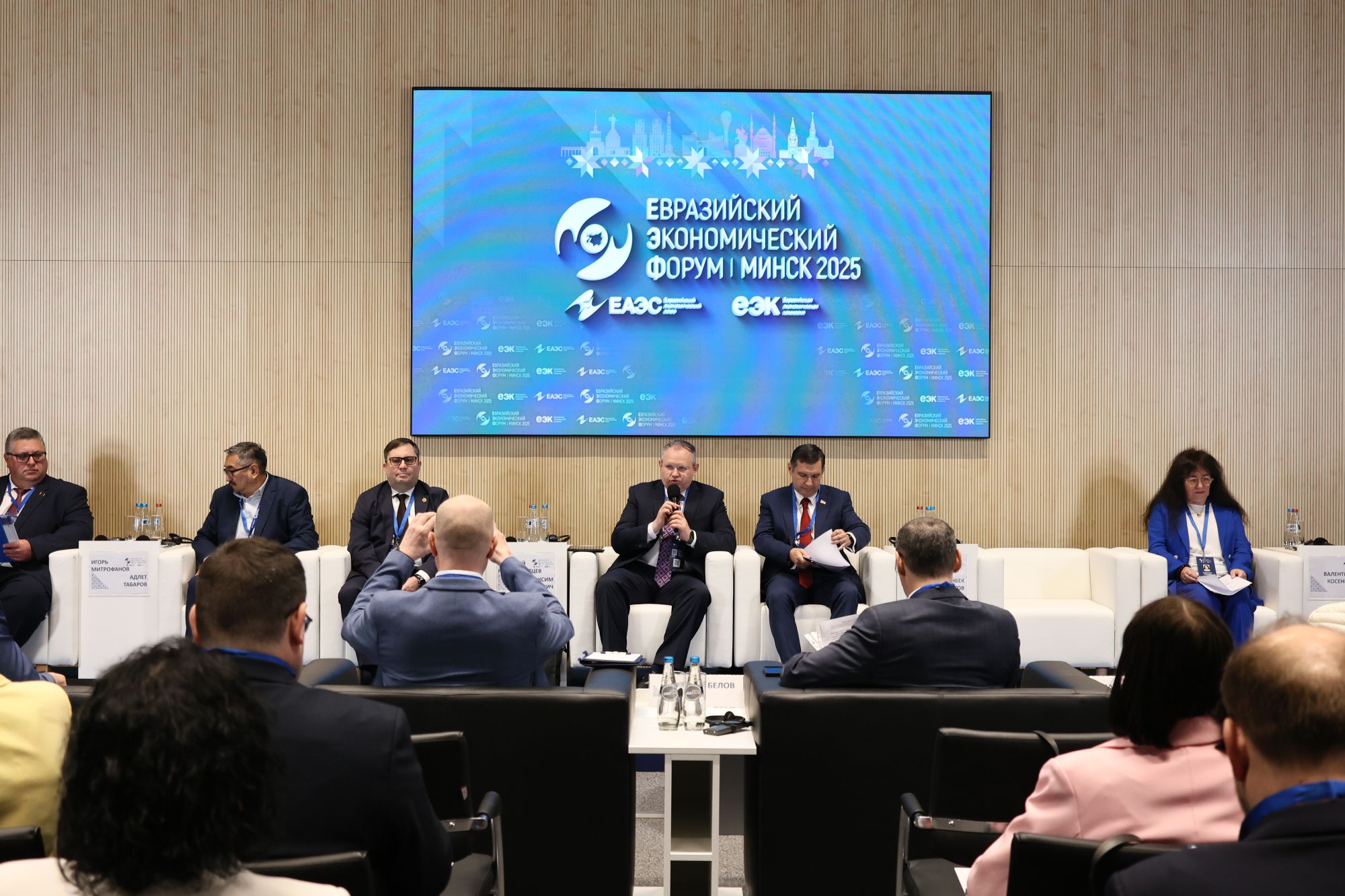
The Eurasian Economic Commission has conducted the first-ever comprehensive study of the EAEU pharmaceutical sector's development, with a focus on competition. EEC Competition and Antitrust Regulation Minister Maksim Ermolovich presented the findings during the EEF 2025 session, "Pharmaceutical Market Development: Access and Affordability", on June 26.
"The pharmaceutical sector is among the most tightly regulated segments of the economy at both the supranational and national levels within the EAEU, requiring careful antitrust oversight across both cross-border and domestic markets", Ermolovich said.
The study identified several regulatory challenges, including differences in the application of EAEU-wide norms at the national level, inconsistent registration of pharmaceuticals under unified rules across member states, a high and opaque market entry threshold, and varying approaches to determining drug interchangeability for public procurement. These factors can create barriers for both businesses and consumers.
The session paid special attention to price regulation. As Ermolovich pointed out, this remains under the national prerogative of EAEU member states. "However, as we build a common pharmaceutical market, it is essential to address regulatory differences and the resulting price disparities", he said. "This poses a challenge to competition."
The study found that price differences among EAEU countries are most pronounced for cardiovascular drugs (up to 508%), blood and hematopoietic agents (up to 497%), and antibiotics (up to 275%). These disparities stem from differences in the scope of government price controls, methodologies for calculating price ceilings, and lists of reference countries. In some cases, unfair market strategies by economic entities may also play a role.
In response, the Commission has proposed exploring the creation of a model list of medicines for price regulation purposes, along with a model methodology for calculating manufacturer price ceilings, to ensure equal and guaranteed access to medicines for all EAEU citizens. Work is also set to begin on a "Code of Good Practices for the EAEU Pharmaceutical Sector" as a soft regulatory tool to prevent anti-competitive behavior in the market.
Session participants discussed the prospects for developing a unified EAEU pharmaceutical market, the role of antitrust authorities, and measures to stimulate pharmaceutical production.
The discussion featured Timofey Nizhegorodtsev, deputy head of Russia's Federal Antimonopoly Service; Belarusian Deputy Health Minister Alexander Starovoytov; Hans Kluge, regional director for WHO/Europe; Kyrgyzstan's Deputy Health Minister Kaarmanbek Baidavletov; Adlet Tabarov, deputy chairman of the Board of Kazakhstan's Salidat Kairbekova National Research Center for Health Development; leaders of industry associations and pharmaceutical companies; and representatives from expert and academic communities. Businesspeople and officials from China, Cuba, and Myanmar were in attendance.
In 2024, the EAEU pharmaceutical sector was valued at $30.9 billion, of which 66% came from the pharmacy (retail) segment and 34% from government procurement. The pharmacy segment represents 3% of total retail sales in the Union, while government drug procurement makes up 7% of all public procurement in the EAEU. In 2024, pharmaceutical output in EAEU countries reached 948 billion Russian rubles or $10.2 billion, with production volumes in ruble terms growing by 18%.
