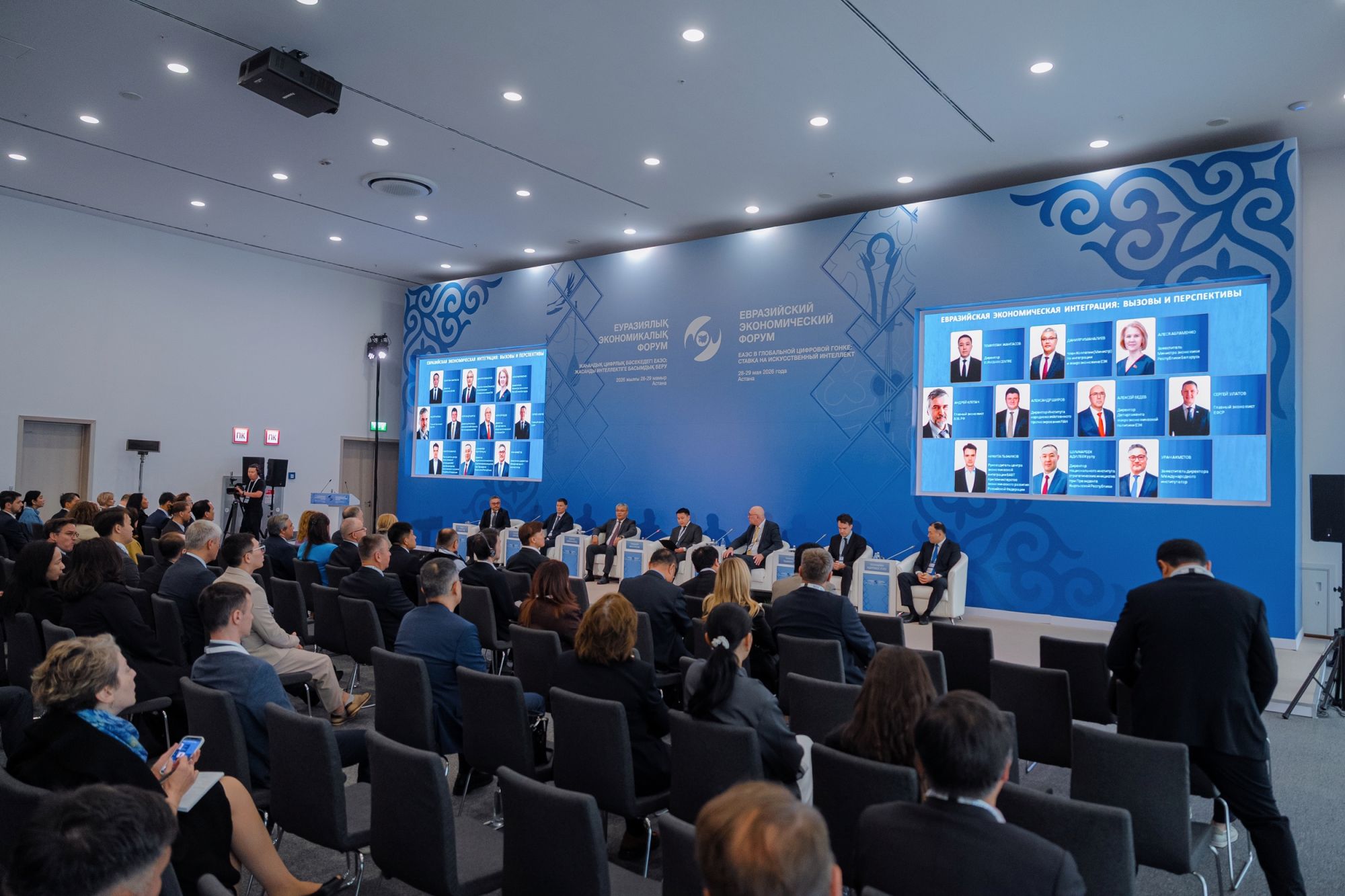
Key issues related to the development of Eurasian economic integration were discussed by participants of the thematic session “Eurasian Economic Integration: Challenges and Prospects” held on 29 May in Astana as part of the V Eurasian Economic Forum.
The discussion brought together representatives of the Eurasian Economic Commission, heads of economic ministries, development institutions, and scientific experts from the member states of the Eurasian Economic Union (EAEU).
Participants highlighted the ongoing global economic transformation processes and the related challenges facing both the EAEU member states and the Union as a whole. These include changes in the rules of global trade, the restructuring of global supply chains, rising prices for raw materials and food products, and the rapid development of technologies associated with digitalization, robotics, and the introduction of artificial intelligence. Particular attention was paid to the economic potential of the EAEU under the new global realities.
Daniyar Imanaliyev, Minister in charge of Integration and Macroeconomics of the Eurasian Economic Commission, spoke about the significant results achieved by the Union, the key priorities of the Eurasian agenda in the long term, and the opportunities available to member states amid ongoing global economic changes.
The EEC Minister emphasized that the Eurasian Economic Union has demonstrated its ability to effectively respond to external challenges, ensure the stability of mutual trade, and strengthen cooperative ties among member states.
“The EAEU has proven itself to be an effective mechanism for addressing the key challenges facing our states, businesses, and citizens. We have maintained the intensity of mutual trade flows, launched a financing mechanism for industrial cooperation, and strengthened the common market. Today, the Union is one of the centers of economic attraction on the international stage”, Daniyar Imanaliyev stated.
He also noted that amid the rapid development of digitalization, artificial intelligence, and robotics, the EAEU countries need to intensify cooperation in these areas.
“Our common task is to accelerate technological development within the Union. We have all the necessary tools and potential to achieve this”, the EEC Minister stressed.
Daniyar Imanaliyev expressed confidence in the continued productive cooperation among the member states and emphasized the importance of the active participation of the expert and scientific communities in advancing integration processes across the EAEU space.
